
What are soccer training cones and why you need them
Soccer training cones are simple plastic markers used by players to structure their training sessions. They allow you to define spaces on the field, outline movement paths, and create drills that focus your effort rather than running aimlessly. A cone is used to mark a turn point, change-of-direction spot or to simulate a defender when you train alone. Using cones gives your solo practice more shape and intention and helps you develop skills that transfer into competitive games. If you use soccer training cones in your routine you build routines, repeat key actions and reinforce good habits that become second nature on the pitch.
In individual sessions the value of cones is especially high because you don’t need teammates or a coach to arrange the drill. You can deploy a handful of cones in a backyard, park or indoor turf space and practice dribbling, agility, passing accuracy or foot-work. When you set up cones you are controlling your environment- you decide the challenge, the spacing and the pattern. That control enables you to progress steadily and measure your improvement. For players who take training seriously the investment in a set of quality cones is small compared to the improvement you can achieve.
Why use soccer cones in individual training
Using soccer training cones in your solo practice delivers real, measurable benefits. When you train with cones you sharpen your foot-work, improve your control in tight spaces and enhance your ability to react quickly when the direction of play changes. Experts show that agility drills using cones help players move more confidently and avoid awkward turns or stumbling. Those changes don’t only matter in training; they matter in matches where space is tight, time is short and you need to act instantly.
Many footballers use cones because they convert abstract skills into physical routines you can repeat until they feel automatic. For example you might set up five cones spaced out and dribble through them using both feet, switching direction at each cone. Over time your coordination improves, your touch becomes sharper, and your decision-making becomes quicker even when fatigued. Using cones also gives your training more structure. Instead of kicking the ball aimlessly you have defined tasks, measurable outcomes and a way to push yourself further without relying on teammates or a coach to set it up.
Another benefit of solo cone training is that you develop muscle memory and movement economy. When you repeat dribble patterns, direction changes and acceleration bursts around cones you train your body to move efficiently. Research into agility cone drills shows that players who do speed and change-of-direction drills often improve not only their speed but also their balance and body control. Using soccer training cones gives you the tools to isolate specific movements, practice them in high volume and integrate them into your matches.
Types, sizes and how many you need
Soccer training cones come in many shapes, sizes and materials which influence how they perform in your drills. You will find flat disc cones, taller marker cones and cones designed for travel or indoor use. Flat disc cones are low profile and are excellent for close-control drills, dribbling paths and indoor turf spaces. Taller marker cones help when you need visibility across a larger area, want to mark boundaries or simulate defenders or targets. The height of cones can vary from a few centimetres up to 20 cm or more depending on the design and purpose.
Choosing the right number of cones for solo training is also important. You don’t need a huge pack if your focus is on individual skill work. A set of around 8-12 cones is typically sufficient to set up dribbling lanes, zig-zag patterns or shuttle setups in a small area. If you expand to more advanced drills, wider space or group training you might increase to 20-30 cones. What matters is that you have enough markers to create meaningful patterns without cluttering your space or losing control of the drill.
The material and durability of cones also matter. Outdoor use often means rough surfaces, grass, turf, or wet conditions. High-quality cones made of durable plastics or flexible materials last longer, retain shape, resist fading and stay visible. Many outdoor training guides stress that durable weather-resistant cones improve session flow and reduce frustration when markers get lost, break or fade. Choosing the right mix of cone types, quantity and quality ensures your training is effective, efficient and sustainable.
How to use soccer training cones for solo practice
Using soccer training cones for solo practice begins with planning your space. Choose a flat, safe surface such as grass, turf or indoor synthetic flooring. Set up your cones in patterns that match your objectives. For dribbling and ball control you might arrange cones in a straight line or zig-zag pattern so you can dribble the ball through them, touch after touch, change directions, accelerate away. For agility and speed you might set up cones in shuttle format, where you sprint to one cone, touch it, run back and then out to another cone. Using cones to simulate defenders or obstacles helps you practise the movements that matter in a match.
When you train with cones focus on repetition, quality and increasing challenge gradually. Begin at a speed that allows you to execute clean movements. Over time increase pace or reduce spacing to raise difficulty. For instance, you might start weaving through widely spaced cones, then narrow the gaps to force quicker feet and sharper turns. Experts in cone drills emphasise that controlled movement is more beneficial than reckless speed because the skill component is then embedded more deeply. When you train solo you can keep track of drills, count reps, monitor your control and pace your progression.
Using cones also allows you to mix ball mastery with physical training. You might combine dribbling through cones with juggling, toe-taps or ball-control touches at each cone. You may integrate bursts of acceleration after each turn, or change direction sharply after a dribble. These exercises develop not only your technical ability but your athletic attributes such as reaction, acceleration and balance. The key is consistency and challenge. The more you train using well laid out cone drills the more you ingrain movements you will use in matches without conscious thought.
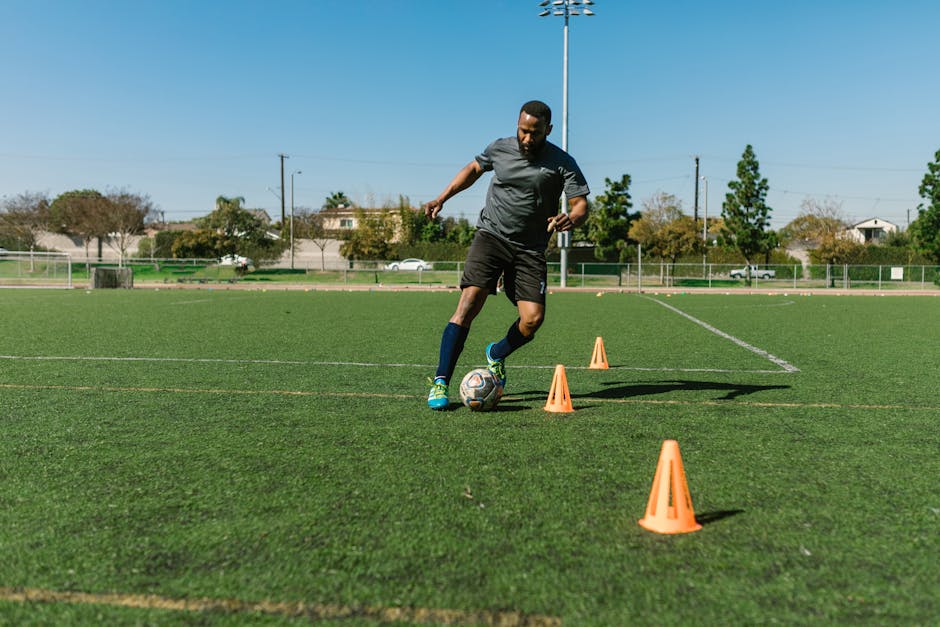
Choosing the best soccer training cones
Choosing the best soccer training cones for your personal training has a meaningful effect on your performance and enjoyment of training. When selecting cones evaluate durability first. You want cones that remain upright after being stepped on or kicked near them. Flexible plastic, weather-resistant materials and stable bases all contribute to cones that last and perform well. Outdoor guides emphasise that cones with strong shells and weighted bases work best in grass, turf and even wet conditions.
Visibility is another major factor. Bright colours such as neon orange, yellow or green stand out on grass or turf and help you easily spot your markers during fast drills. Cones that blend into the field or fade quickly make drills harder, slower and less effective. If you train when light fades or in mixed surfaces pick cones with high contrast and good surface features. Some cone guides recommend matching cone colour with drill purpose so you can visually differentiate different sections of your session.
Think about the surface you will train on. If your area is grass you may choose slightly wider-based cones that don’t tip easily. If you train indoors or on turf you might choose flatter or lighter markers that stay in place but don’t bounce. Transport and storage matter when you set up solo sessions on different fields. A carry-strap or bag for cones makes it easier to move between locations. Choose a set size that matches your space. If you practise in a small area a compact set of markers is enough; if you have full field access you may want larger sets for variety. Having the right set of soccer training cones gives you flexibility, clarity and confidence when training.
Benefits of using soccer training cones in detail
Using soccer training cones offers many benefits beyond simple boundary marking. One key benefit is improved spatial awareness. When you set cones you force yourself to recognise space, lines and movement patterns. That translates into better awareness on the field where you must judge distances, evade defenders and find space rapidly. Another benefit lies in improved foot-work and agility. Cone drills challenge you to move with precision, lean into turns, shift direction and accelerate, which are all game-skills teams look for.
A further benefit is consistency of training. Solo players using cones design repeating patterns that reinforce movement and technique. That repetition creates muscle memory and helps you execute under pressure. Research on agility cone sprints shows improved speed, coordination and control when drills are executed properly. In addition soccer training cones permit progression. You can start simple and increase the difficulty as you improve. That progression keeps you motivated and prevents plateaus. Finally cones help you evaluate your progress objectively. You can time your drills, count touches, monitor how many cones you can clear within a target time and adjust accordingly. That measurement gives you feedback rather than guessing whether you improved or not.
Using soccer training cones also helps in injury prevention. When you practice with planned drills you move correctly, warm up properly and train within controlled parameters. Studies show agility and change-of-direction drills help strengthen tendons, improve body control and reduce risk of awkward falls or strains. In short cones are not just training accessories; they are fundamental to structured, effective solo soccer training.
Practical tips for solo drill design using soccer training cones
When you design solo drills with soccer training cones start with your goal. Are you working on dribbling, fitness, reaction speed or ball control? Choose the number of cones accordingly. For dribbling you might use 6-10 cones spaced about one to two metres apart and practice weaving with the ball. For agility you might set five cones in a line, run to each and back, emphasising turns and changes of pace. For control you might set up a small grid of cones and perform foot-touches, inside outside moves or ball mastery at each marker.
Set a small challenge each time you practise. For example you may count how many times you can dribble through the cones in thirty seconds or how quickly you can complete the course without losing control. Track that figure. Press yourself to beat that number. Over time you will see improvement in speed, control and decision making. Use variation to keep things engaging. Change the spacing, turn patterns, add a pass or a touch before each cone or include a burst of acceleration at the end.
Make sure your setup is safe. Clear the area of hazards, pick a flat surface and check your cones are properly visible. Warm up before your drills so your body is ready for sharp turns and accelerations. After your session cool down, stretch and reflect on what movements felt good and what felt weak. Keeping a simple log of your drill times or touch counts helps you hold yourself accountable and offers tangible proof of your progress. With consistent use of soccer training cones you will elevate your solo practice from random touches to structured meaningful sessions.
Final thoughts on making cones work for your practice
Soccer training cones are far more than plastic markers on the field. They are the tools that give your solo practice shape, purpose and measurable growth. When you choose the right cones, understand how they help, and design your drills with intention you set yourself up for continual improvement in dribbling, agility, control and decision making. Training alone does not mean you settle for less. With a set of quality cones and a plan you can push your skills, measure your progress and build competence that shows in games.
Use your cones with focus, repeat your key movements, raise the challenge and track your outcomes. Over time you will notice your touches become tighter, your movements sharper and your reactions faster. Your confidence on the ball will grow, and you will carry the benefits from your solo sessions into competitive matches. The right use of soccer training cones empowers you to make every training minute count.
If you are ready to take your solo sessions even further, explore our Soccer training equipment guide to discover more tools that complement your soccer training cones. With the right gear and mindset, every practice can move you closer to becoming a more confident, skilled, and complete player.